
The stats, they are a-risin’. And the Irish desserts are getting a lot of attention. I commend them to you (click on the image for the full collection).

That’s the Baileys Irish Cream Marble Cheesecake there. I can’t tell you how hard it was to actually let the neighbors eat some of that. (droooool)
…I mean nostalgia in its original sense of something that causes you a slight yearning pain as you think about things past and lost.
No telling what brought on today’s attack of it. I was writing, and got the urge for something crunchy and sweet, but light. And suddenly the memory broke surface: brown-edge wafers.
How many years has it been since I last sat down to decimate a box of Nabisco Brown Edge Wafers? I used to love those things intensely. Indeed, there is a place in The Worm Ourobouros where Lords Juss and Brandoch Daha, and poor Mivarsh Faz (I still feel bad about the crocodile) drop in on Queen Sophonisba the Fosterling of the Gods at her place inside the mountain Koshtra Belorn, and the Queen has them served dinner —
“Behold, ambrosia which the Gods do eat and nectar which they drink: on which meat and wine myself do feed, by the bounty of the blessed Gods. And the savour thereof wearieth not, and the glow thereof and the perfume thereof dieth not forever.”
So they tasted of the ambrosia, that was white to look on and crisp to the tooth and sweet —
— and when I was fourteen, or whenever it was I read this book for the first time, something in my brain sort of chucked out the “white” part, but kept all the rest of the description, and immediately flashed on what they must have been eating: Nabisco Brown Edge Wafers!
(Sigh: even then, such a food geek. And Queen Sophonisba could probably have used some vegetables in her diet as well, but that’s not the issue. …Still chuckling over the new cover on The Worm: they’ve got Tolkien blurbing Eddison. This is delicious, considering that Eddison blurbed Tolkien first, back when Tolkien was the new unknown writer and Eddison was hot…)
Anyway, in the course of the nostalgia attack, I went online and found, to my grief, that they’re not made any more (see here for a rather depressing list of all-gone goodies. Jeez, if I’d known the box of Cheese Tid-Bits I ate in NY four or five years ago was the last one I was ever going to ingest…! Why didn’t I buy a case when I had a chance! Argh. And as for the noble Oysterette, I’ve been mourning that loss for years already).
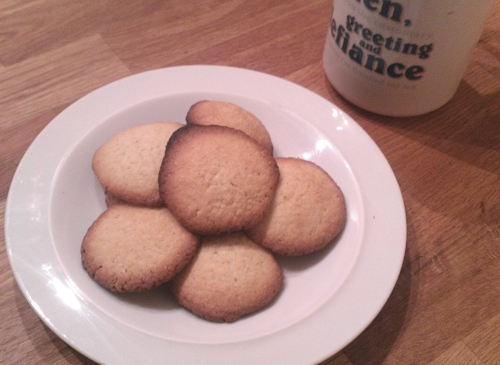
But no point crying over uncookie’d milk. So I made some Brown Edge Wafers. (The picture will come later. Peter went out to do some research and took the camera with him: the phone’s camera is no good for this, and my Clie is up in the charger.)
…The recipe about halfway down this page (now available only via the Wayback Machine) works pretty well. However, I found I needed to beat a few tablespoons of milk into it to get the wafers to spread properly. Only after I was almost through baking did I find this page (also now Wayback only), which has a slightly different recipe that purports to be crisper. Must try that next time.
Notes for those of you who might try the first recipe:
(a) Sweet butter, not salt. UK users: Lurpak is best. Also: cake flour, not all-purpose or plain / “strong white”.
(b) Cream the sugar and butter really well. Get obsessive about it…it pays off.
(c) Even if you’re using a nonstick cookie / biscuit sheet, you must grease or spray it. Otherwise the little monsters will adhere, doing demure little backflips when you try to spatula them off. Frustrating.
(d) Letting them sit on the sheet for a few minutes before transferring them to the rack seems to help.
(e) Watch the timing. Eight minutes was about right for these in our little fan oven.
…Sigh: back to work.
(And now that I’m thinking of it, what were those cream wafers that the Lady Prezmyra was eating in chapter VII?…)
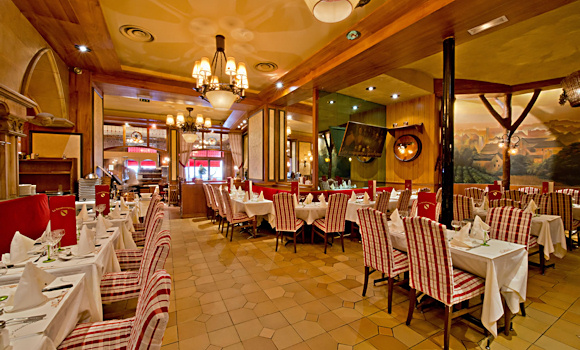
Must go to this place when we’re next in Paris. Is this where I had that beer once while waiting for the train? Possible. (ETA: Yes it was. And they had a great heap of freshly cooked crayfish on ice outside. They were fabulous.) Click on the menu image to get a version big enough to read. Yum.
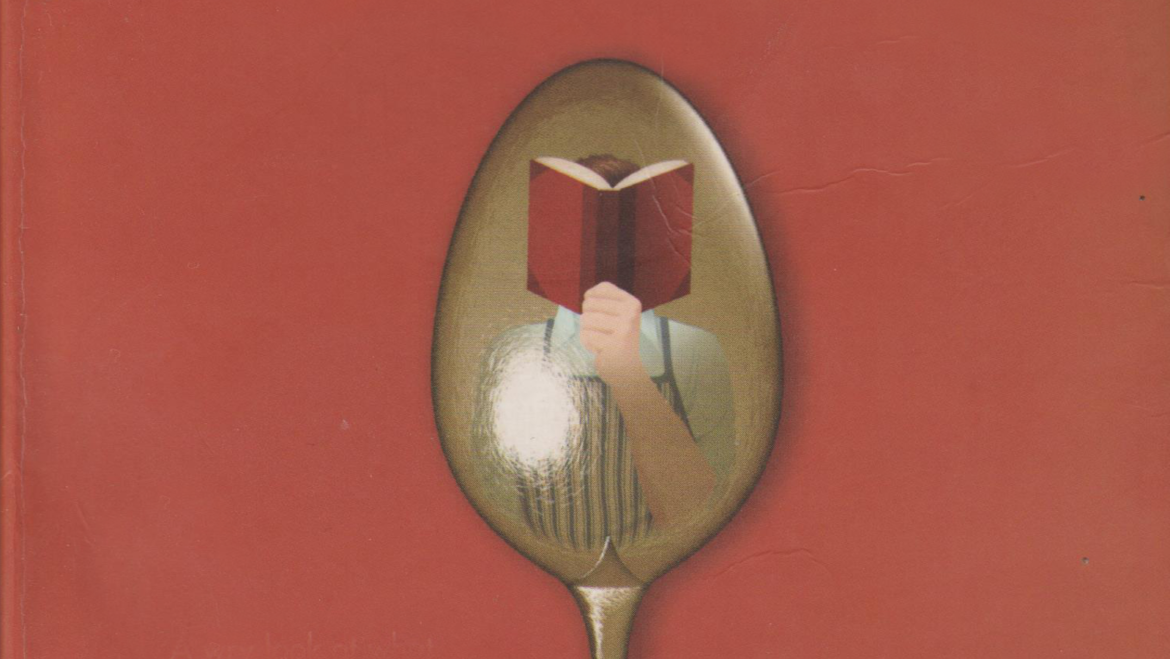
The Pedant in the Kitchen is a lot of fun. Peter spotted the book in a swing through Hodges Figgis in Dublin, glanced through it, and handed it to me, saying, “This guy is our kind of people.”
I opened the book at random and found:
“How many cookbooks do you have?
(a) Not enough
(b) Just the right number
(c) Too many?
“If you answered (b) you are disqualified for lying or complacency or not being interested in food or (scariest of all) having worked everything out perfectly. You score points for (a) and also for (c), but to score maximum points you need to have answered both (a) and (c) in equal measure. (a) because there is always something new to be learned, someone coming along to make it all clearer, easier, more foolproof, more authentic: (c) because of the regular mistakes made when applying (a).”
The author then lists his twenty or so most-used cookbooks, which live in his kitchen (as opposed to the many others which reside in other parts of his house). Of his list, we have fifteen of his twenty, in just about the same order of importance. This impressed me, since I have to confess I love it when people agree with me.
The book has many other charms. Mostly it’s about Julian Barnes’ attempt to bring precision to the art of cooking: but there’s more to the book than that. Bits like this:
“Anthony Lane, reviewing the scarily efficient Martha Stewart, quotes this typical piece of advice about having folks around for a bite: ‘One of the most important moments on which to expend extra effort is the beginning of a party, often an awkward time, when guests feel tentative and insecure.’ To which Lane exactly responds: ‘The guests are insecure? How about the frigging cook?'”
“River Cafe Green has a terrific recipe for Penne with Tomato and Nutmeg (and basil, garlic and Pecorino), which I make regularly: the nutmeg is the key surprise element. But I did first have to overcome the recipe’s first sentence: ‘2.5 kg ripe vine cherry tomatoes, halved and seeded’. So that’s well over five pounds of cherry tomatoes. And how many of the little buggers do you think you get to the pound? I’ll tell you: I’ve just weighed fifteen and they came to four ounces. That’s sixty to the pound. So we’re talking 300, cut in half, 600, juice all over the place, flicking out their seeds with a knife, worrying about not extracting every single one. All together now: NO, WE’RE NOT GOING TO DO THAT. Leave the seeds in and call it extra roughage.”
“What do cookbook writers want? Mute obeisance? What kind of relationship would that imply? You’re not a spud-bashing squaddie after all, and they can’t put you on a charge for insolence, dumb or otherwise. Remind yourself who paid money for whose book. The only way to earn their respect is to rebel. Go on: it’s good for you. It’s probably good for them too.”
“Kitchen shops sell a lot of useful gadgets and time-saving equipment. One of the most useful and most liberating would be a sign that the domestic cook could place to catch the eye in moments of tension: THIS IS NOT A RESTAURANT.”
…Definitely a recommended book.

He’s one of my favorite writers. Not so much for the Madeline books, which are admittedly charming, but for his writing (and illustrating!) about food and hotels.
This includes books like Hotel Splendide, and various others in which Bemelmans ever so slightly fictionalized the people he lived and worked with in various European and (later) American hotels and restaurants, from childhood to adulthood. The books are full of his illustrations of those people — wonderfully idiosyncratic drawings from which the personalities of those drawn look out with a cantankerous quality that I think possibly had a whole lot to do with the artist.
I think particularly of Bemelmans’ affectionate tales and sketches of the manager of the Splendide (which is in New York and is, I think, a roman a clef version of the Ritz-Carlton as it was in the grand old days). One night Herr Brauhaus comes in late, catches his night staff slacking off, and fires them all — then, soft-hearted creature that he is, lets them talk him out of it. “No, not now, come back, tomorrow you are fired.” (One by one the doormen and bellboy and all the others plead with him to reconsider his decision.) “Mr. Brauhaus walked out again and around the block. When he came back, he called them all together. He delivered what was for him a long lecture on discipline, banging the floor with his stick, while the dachshund smelled the doorman’s pants. ‘I am a zdrikt disziblinarian,’ he said. They would all have to work together; this hotel was not a gotdemn joke, Cheeses Greisd. “‘And now get back to work.'” …This episode and many others are illustrated in a style that’s cheerfully unforgiving — the overfed patrons, the underfed wait staff, nothing glossed over or unduly concealed: New York hotel life of the 30’s and 40’s all laid out before you, as it were, on a plate, with no more garnish than it absolutely needs.
Many of the hotel and restaurant stories, and numerous shorter works, including lots of illustrations and recipes, and a selection of Bemelmans’ collection of period menus (he was always drawing on them…) appear in La Bonne Table. I would quote something from that here, but I lent the book to a chef I know, and he hasn’t returned it yet. Time to get a spare copy, I guess… La Bonne Table is definitely worth a read: having read it first, nothing in Kitchen Confidential surprised me in the least. Ludwig got there first.
He’s buried in Arlington National Cemetery. A good day to stop by with a flower, if you’re in the neighborhood. (Or a souffle…)
Happy birthday, Ludwig!
Older Posts