

…via our buddies / production partners at Tandem.
There was an informal “guessing pool” in the office as to what the first night’s ratings of Die Nibelungen on Germany’s Sat.1 would look like. The target (“most desirable”) ratings group is 14-49s. In that group, 20% is acceptable. 25% is pretty damn good. Rola (one of our producers) was holding out for 28-30%. I confess to having chickened out, suggesting 26%. 
This morning’s result:
30.2%. The highest result Tandem has ever achieved in its home market for a TV production…and generally just an astonishing number.
In the Austrian market, where the national broadcaster ORF 1 showed the first night of the miniseries, the rating was 40%. (Here’s their page about the second night.)
We’re still waiting for the Swiss results (Sat.1 has a “daughter” channel in Switzerland). But in the meantime, Peter and I are sitting here and feeling so, so vindicated. All that hard work…all those late nights…have produced the desired result.
There’s always the second night’s ratings to wonder about. We’ll see how we do.
Meanwhile, the champagne is in the fridge…and we’re getting the next projects ready.
(Re the comments: Sony will be releasing the English-language DVD version sometime in the spring, with the title “Ring of the Nibelungs”. [The trailer can be seen at ring-of-the-nibelungs.com.] The version which is on theatrical release at present in the UK will be airing on Channel 4 sometime in the spring, either around Easter or over one of the May bank holiday weekends.)
(Re: making the script public: Unfortunately we can’t… sorry.)
[tags]Ring of the Nibelungs, Sword of Xanten, Dark Kingdom: The Dragon King, Peter Morwood, Duane Duane, Tandem Communications, Rola Bauer, Tim Halkin, Uli Edel[/tags]
…the Ring of the Nibelungs, that is.
Its story is far older than Wagner’s version: it was one of a number of factors which inspired Tolkien’s greatest work. It appears first in the ancient Volsungasaga; then it became a part of the Nibelungenlied, the Song of the Nibelungs, a story which became embedded in German culture.
In 1999 we were at a media convention in Germany and met some people who were involved in the earliest stages of work on a filmed version of the Nibelungenlied. One thing led to another, and they hired us to write the script. Two nights ago, after five years of work, we attended the premiere in Munich, saw the film introduced by the Chancellor of Bavaria, and at the end of it all heard the place go up in a roar of applause that was … something more than satisfying.

These five years have brought us a couple of the best friends anyone could find in the creative arena, Tim Halkin and Rola Bauer at Tandem Communications in Munich — and have thrown us together with some really talented folks in the allied crafts, such as our director Uli Edel, our star the spectacular and delightful Kristanna Loken, and the special effects partnership of Volker Engel and Marc Weigert at Uncharted Territory. It’s been a wild ride… and we’d do it again like a shot.
(Update: The miniseries has since premiered on the Sci-Fi Channel in March 2006 as Dark Kingdom: The Dragon King.)
So, onward to the next thing. But in the meantime…we’re still basking in the afterglow. I’ll find more time to blog about this eventually. Meanwhile, the Flickr “Zeitgeist” badge in the next column has pictures from the premiere and the party afterwards at Munich’s great club “P1”.
[tags]Ring of the Nibelungs, Sword of Xanten, Dark Kingdom: The Dragon King, Peter Morwood, Duane Duane, Tandem Communications, Rola Bauer, Tim Halkin, Uli Edel[/tags]
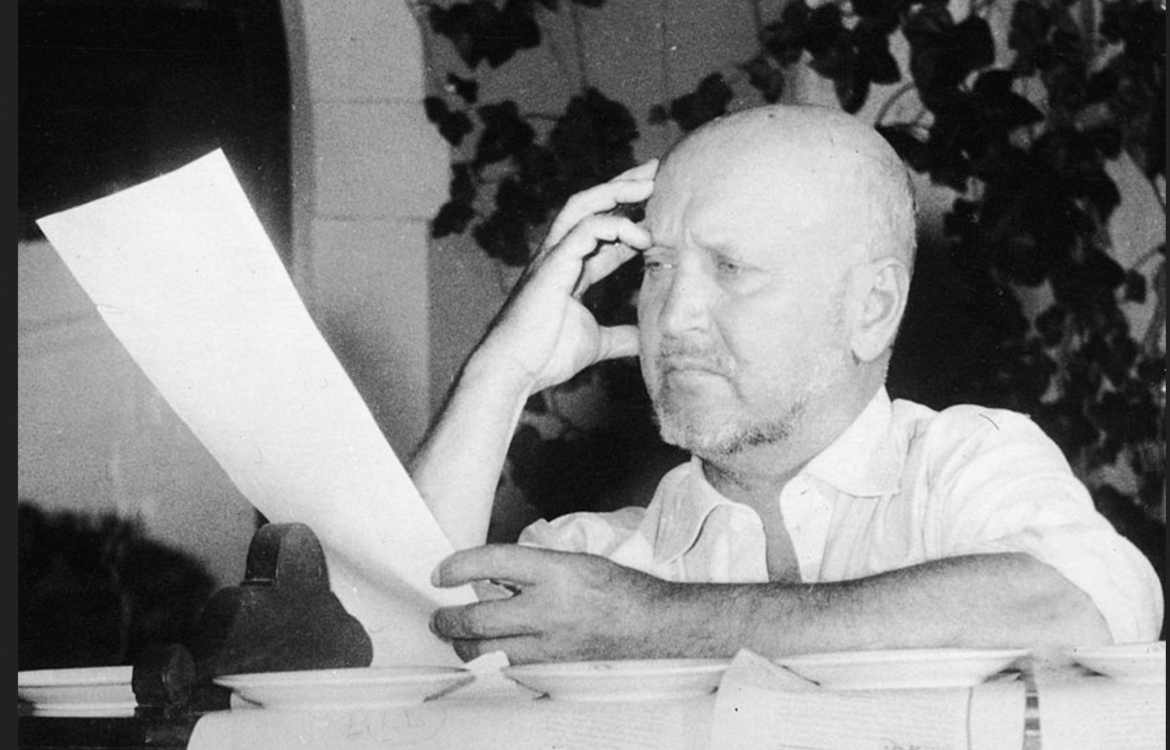
He’s one of my favorite writers. Not so much for the Madeline books, which are admittedly charming, but for his writing (and illustrating!) about food and hotels.
This includes books like Hotel Splendide, and various others in which Bemelmans ever so slightly fictionalized the people he lived and worked with in various European and (later) American hotels and restaurants, from childhood to adulthood. The books are full of his illustrations of those people — wonderfully idiosyncratic drawings from which the personalities of those drawn look out with a cantankerous quality that I think possibly had a whole lot to do with the artist.
I think particularly of Bemelmans’ affectionate tales and sketches of the manager of the Splendide (which is in New York and is, I think, a roman a clef version of the Ritz-Carlton as it was in the grand old days). One night Herr Brauhaus comes in late, catches his night staff slacking off, and fires them all — then, soft-hearted creature that he is, lets them talk him out of it. “No, not now, come back, tomorrow you are fired.” (One by one the doormen and bellboy and all the others plead with him to reconsider his decision.) “Mr. Brauhaus walked out again and around the block. When he came back, he called them all together. He delivered what was for him a long lecture on discipline, banging the floor with his stick, while the dachshund smelled the doorman’s pants. ‘I am a zdrikt disziblinarian,’ he said. They would all have to work together; this hotel was not a gotdemn joke, Cheeses Greisd. “‘And now get back to work.'” …This episode and many others are illustrated in a style that’s cheerfully unforgiving — the overfed patrons, the underfed wait staff, nothing glossed over or unduly concealed: New York hotel life of the 30’s and 40’s all laid out before you, as it were, on a plate, with no more garnish than it absolutely needs.
Many of the hotel and restaurant stories, and numerous shorter works, including lots of illustrations and recipes, and a selection of Bemelmans’ collection of period menus (he was always drawing on them…) appear in La Bonne Table. I would quote something from that here, but I lent the book to a chef I know, and he hasn’t returned it yet. Time to get a spare copy, I guess… La Bonne Table is definitely worth a read: having read it first, nothing in Kitchen Confidential surprised me in the least. Ludwig got there first.
He’s buried in Arlington National Cemetery. A good day to stop by with a flower, if you’re in the neighborhood. (Or a souffle…)
Happy birthday, Ludwig!
Last year I went to the mountains to write, and it snowed for nearly a week without stopping. I said to Peter, “This year I’ll go somewhere it won’t snow.” (And somewhere, I thought to myself, where I won’t fall down and nearly break my foot.) Brugge…Bruges seemed safe enough.
Hah.
It’s been snowing fairly heavily, a wet small-flake snow, for about an hour and a half now. It’s starting to stick, as slush if nothing else. If the temperature stays low tonight, tomorrow is going to be exciting for travel: I may not make it up to Brussels after all, unless I absolutely must to do my return-leg train ticketing (I have to be in Paris Friday night). We’ll see if I can do that online from the apartment.
There is one thing about Brussels that I’d miss if I can’t go tomorrow. (Besides the shopping, which I think will have to wait.) The wonderful café Cirio is the home and stomping-grounds of that easy-going star among managerial felines, Le Chat Minou. I would regret not seeing Minou, who knows where the best spot in the cafe is, in this kind of weather (i.e. next to the espresso machine). Well, we’ll see what happens…
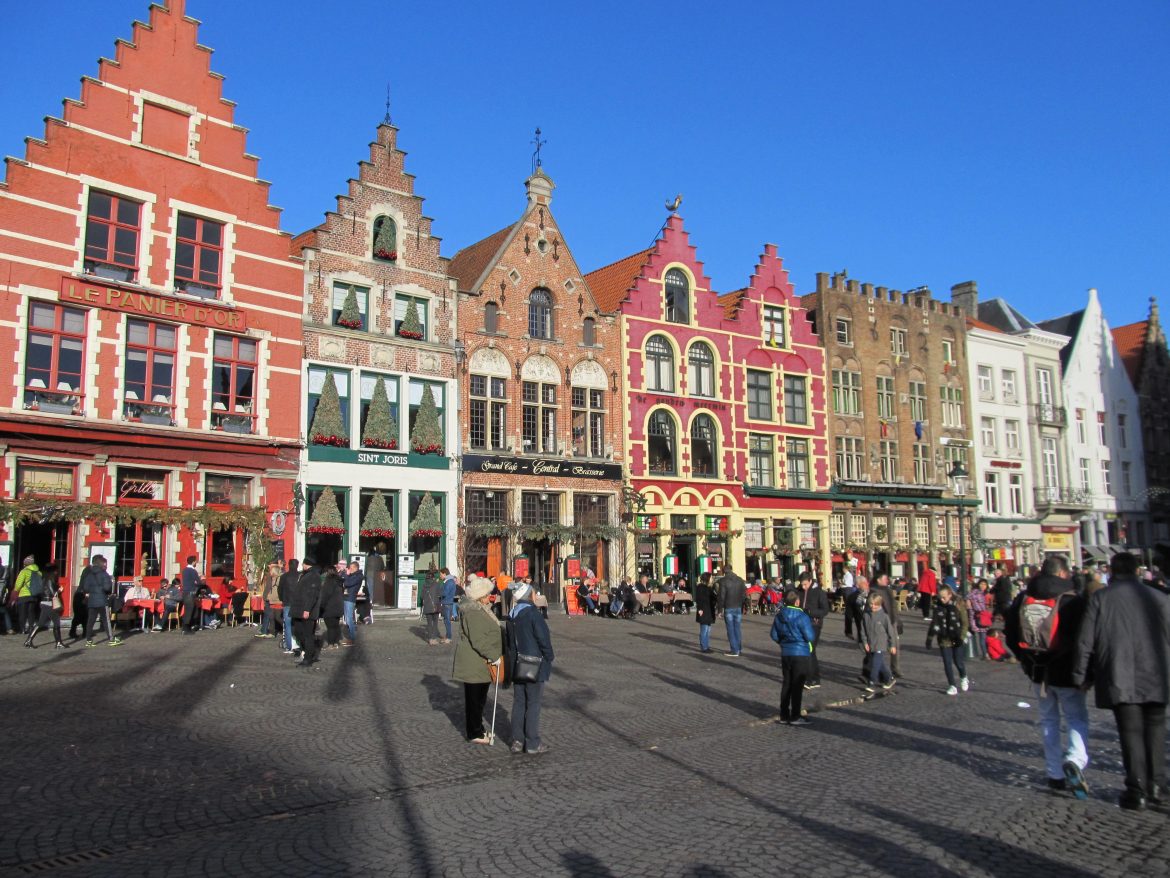
It is a gorgeous day here, sunny and fine…the blue sky being a harbinger (as is so often the case in this neighborhood) of chilly weather in Brugge later this week. No matter. Cold is better than mosquitoes. (Brugge, a well-canal’d city, called the Venice of the North by some, suffers cruelly from mosquitoes in the warm weather. The city sprays and does everything it can, but there’s always stagnant water somewhere.) I am working in a cafe on the Markt (nothing could induce me to tell you which one: you’d all be in here in a matter of minutes, for it’s just about the only one which does not employ the “trap-door spider” technique…more of this another time). (Except for Les Beiardiéres, which is another another story). (And I’ve probably mispelled the Bellringers’ Cafe’s name. My French spelling is not great. Never mind.) Anyhow, this is a good place. The place has been in the same family’s management for three generations now — okay, that’s a short time for this neighborhood, but never mind — and the family member who is “on watch” for this shift is eating his dinner (pasta and a glass of red wine) standing up at he sink behind the bar, while fielding calls on the portable phone. So everything’s under control.
Anyway, a question is on my mind, one which often comes up for me when I’m here. Why is it, in this home of some of the strongest beers in the world, that you hardly ever see anyone plastered?
Maybe I’m just too used to public drunkenness. God knows in New York, and in some parts of LA (which is scarier, in its way, since in LA the odds are better than even that the person is going to be driving shortly…), you see drunk people in the street. We get them in Dublin, though the highest concentrations of them by my observation would be in “stag/hen party” areas such as Temple Bar used to be. (There are other such areas in town now, and nothing would induce me to tell you their names, lest websearches make them more popular.) And usually these drunks have had eight or ten or twelve pints of something, to “keep up with” or otherwise impress their mates. The “something” is usually rated at about 5%. (You can tell, in Britain and Ireland, where the stakes lie. “STRONG IN ALCOHOL!” read the ads that are supposed to get you to ante up for the higher-priced imported beers. Meaning, “Value for money! Spend less, get more smashed!”)
But here in Brugge, the beers seem to start at sort of 7-8% and head north from there…to the delectation, and sometimes the confusion, mental and physical, of the visitors. (I remember walking down a small street near my present lodgings and, with Peter, “giving the wall” to a group of truly stocious British businessmen, who were in the aftermath of some meeting at what is now the Crowne Plaza, near the Burg. They came swaggering/staggering down the middle of the cobbled street, their ties flung over their shoulders, (collectively) twenty-four sheets to the wind; and as they went by, one of them muttered to his friends, “Boy, that lager is really sshomething… where can we get some more?” This suggested to those acquainted with Belgian beer that the poor guys had been drinking something with some serious heft to it, say a golden ale like Hoegaarden, and mistaking it for Heineken, or worse still, Bud. …The only possible comment: “Fffffffffeh.” They couldn’t tell the difference? SHEESH. It’s like not knowing dishwashing liquid from nitroglycerin.
But aside from that: the Belgians seem not to have this problem (and I’ve noted the same in parts of Germany and Switzerland), of being publicly plastered all over the landscape. People come into a bar or a cafe and have one, or two beers, or wow, even three… and go away in possession of themselves. Even late at night, you hear no Bacchanalian whooping in the streets such as you get all too used to in parts of the UK (the Midlands in particular) and some neighborhoods I can think of in London.
Is it just the cultural thing? That a lot of people here are taught from childhood not to
see booze as “forbidden fruit”, the thing you get to overindulge in once you hit legal age, but something partaken of with family, or over meals, not routinely or necessarily to excess — and then this tendency slops over into social drinking as well? Or is it the lack of “chucking-out time” at 11 PM or thereabouts, which in the UK and Ireland seems to function as a gun held to some people’s heads, “making” them order vast amounts of drink, and drink it all in half an hour, at which point they have to leave? …
It’s definitely not the price of beer here, anyway. Beer is cheaper here than it is in Dublin (due to the goverment not slamming nearly 40% tax on it. Or it might be more: I forget). And in the UK as well. (Don’t ask me what the tax rate is there, but it’s high enough.)
Maybe I’m just not out late at night in Brugge enough? Maybe. This book is distracting me. I look to the citizens of Brugge to enlighten me. (But out late at night or not, what can’t be hidden is the “result” of late night overdrinking, on the sidewalks. I’ve never seen it here, where I walk early in the morning…and I’ve seen it too often in New York, and in London, and in Dublin, where, early or late, the streetcleaning isn’t what it might be.)
Meanwhile, I’m going to finish my coffee and get out of here. Roshaun is getting crazy again: I don’t know what I’m going to do with that boy. I hate to kill my characters unless they give me cause. But he’s pushing it….
 I was looking at the covers for the digest editions of the first three YW books today, and something occurred to me about the one for Deep Wizardry. (Something besides the fact that it’s my favorite of the three.)
I’m not sure that Nita’s bathing suit is really there…
On examining the image closely (and scanning it to get a better look: click on the thumbnail or here to see the closer scan), I find that the bathing suit seems to have the same sort of relative “there-ness” as the clothes-in-transition of some anime characters undergoing henshin (that’s “transformation”, more or less). Cf. the thumbnails of Ami undergoing henshin into Sailor Mercury, or Makoto
  changing to Sailor Jupiter. (Though the effect on the DW cover is far more subtle.)
The “magic” light effects on the DW cover seem to be trying to suggest that they’re “in the way” of Nita’s bathing suit…but look for the suit itself, and you don’t see a whole lot.
Hmm. Hope this doesn’t get me in trouble with some hypersensitive parents’ group somewhere…

I have to take a break and blog a little here.
Tomorrow (it would have been today, but DHL in Ireland has done something weird to their pickup and flight schedules: never mind…) — tomorrow, I say, the copy-edited manuscript for Wizard’s Holiday goes back to the publisher. I’m in the middle of the last changes I can make before we go to page proofs, probably in about a month.
The MS is presently a pile of paper which has many, many Day-Glo Post-It notes sticking out of it. I thought I was done with the MS this morning, but noooo, I had to read it through again…and find all these things that need dealing with that didn’t get dealt with. Ah well: better to deal with them. But how is it I missed them on the first pass?
I feel like a complete basket case…but at this point in a MS-grooming, that’s completely normal. I find myself looking at things I wrote as if I expected my readership to just intuit them somehow…and I feel like I’m not the writer I was (if indeed I ever was that writer. If you see what I mean.) This perception has as much to do with blood sugar and eyestrain as anything else, I know that…but there it is regardless.
One by one the Post-Its come out as paragraphs and sometimes whole pages get inserted to clarify issues which I thought (at the time of writing) would have been plain even to paramecia, but which I now see were obscure to everyone on Earth but me. I roll my eyes at my own obtuseness. (Just once or twice I roll them at my editor and copy-editor, but only a little: here and there they’ve missed something that really is obvious. In 99% of the notes in the MS, though, they’re right on. And in Lynn I am truly blessed in a copy-editor who does not do what one of Peter’s did, correcting his MS not to house style, but to her own…which included removing all apostrophes from dialogue because “the use of apostrophes gave an unnecessarily modern flavor to a period fantasy novel”. He put every one of them back; the dialogue was “contemporary” to those speaking it, and if you take the C-E’s line of reasoning too far, you wind up writing novels in Gothic, or Norman French. “Which limits your market rather,” P. says.)
(sigh) This process is kind of like hitting yourself on the head with a hammer. So much fun when you stop… I look forward to about 1 AM, when I should be finished, with great joy. …Yet good things are getting done here. At least one scene got written which made me tear up slightly: a rarity. A couple of other scenes made me chuckle out loud (also fairly rare). It’s too soon for me to tell whether this book is any good; ask me again in October, when it comes out. .
And this always happens. Always. The Big Mood Swing, spread over months — from finishing the first draft in a blaze of sweat and glory, to the rewrite and copyedit, usually spent cowering and clutching my head in multiply recurring fits of acute embarrassment, to the point where I go over the page proofs, a little calmer but still not fully convinced. But at the same time, there’s usually another book in progress, and this complicates the clinical picture somewhat. (There will be this year, for sure: Wizards at War really needs to go to the publisher in October.)
…Sigh. Back to work. I tell myself everything will be fine when I’m done. But right now I don’t believe it.
Mothers, don’t let your kids be writers!
(…As if you could stop them.)

Comments here, in the quoted parts, from a friend:
“So the Pig is one of those characters that just waits on the sidelines for a good book to wander into whether he was meant to or not? 😉 ”
The Pig would say, “That last requires a definition of who’s doing the meaning…”
“No wonder you get writers complaining about their characters running away from them.”
(snort) I wouldn’t be one of those as a rule. I’ve said it before: if a character routinely shows an inclination not to do as they’re told, to the point where their actions threaten to derail a carefully designed plot, I kill them. Plotting is mine, saith Me: I will handle it — and I expect my characters to “understand” that I have their best interests at heart, even though it may not look like it at the time. They start getting disruptive, I return them to the Creativity Pool and tell them to find some other author. We’ve got work to do here.
That said: “sidelines”, in the sports idiom, are exactly where some of my characters are. I usually have one eye on players who haven’t yet entered the game, as it were, and I’m not above one of them sidling over to the manager in the dugout, also as it were, and whispering, “Boss, come on, break the lineup and let me bat after him…” If I can be convinced that it’s a good idea, sure, why not? — as long as the main thrust of the through story is assisted.
I’m not going to add spoiler protection on what follows, except to suggest that people who don’t want to know one way my characters get developed should probably refrain from reading it.
Flash back to June of 2000. Sometimes, when circumstances at home haven’t been quiet enough for writing to get done in a timely way, I take off for a week or so with the portable to be by myself with the work. We have a friend in Switzerland who has a small studio apartment in a remote spot on Mount Rigi, and for a nominal charge to cover heat and power and resort tax and so on, one or the other of us can catch a cheapo flight via Ryanair (with a change to Easyjet) to Zurich, catch the train downcountry and up the mountain, and go hole up there in perfect quiet and just get on with it.
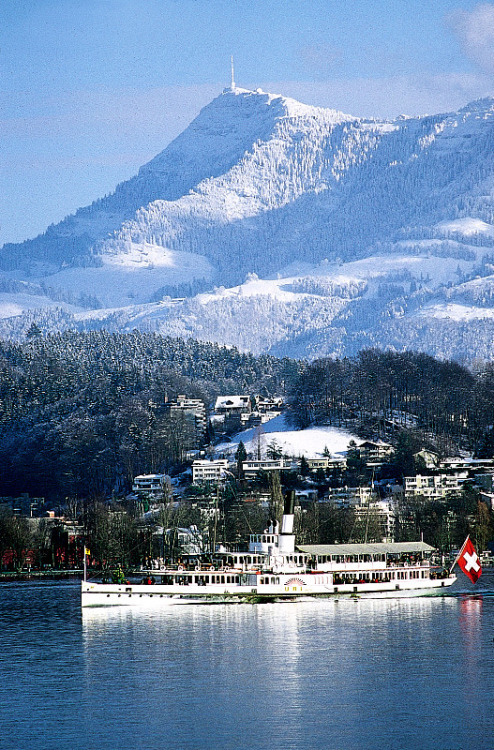
It’s a great spot. There are no roads. There are no cars. (That trip I got to see one of the neighbors having their newly-cut hay brought down the mountain by helicopter.) There is no phone in the apartment (though on top of old Rigi is a massive candy-striped cellphone mast with so many emitters on it that it ought to be possible to receive calls on one’s fillings, and the Nokia connected to the portable [in the days before wireless broadband] made it possible to pick up the e-mail and send off completed files anyway.) It’s absolutely quiet up there, and all the views are wonderful, especially the southern one (see The Wizard’s Dilemma p. 129 for a slightly reworked view of the Alps as seen from the Vierwaldstätersee area). There are no distractions. You can even order your groceries online from Migros (formerly LeShop.ch, though the domain has been retired) and have them delivered to the local post office/train station for you to pick up.
But for stuff like milk and bread and fresh vegetables and so on it’s silly to do that. After a day or three of hard work the urge to get out a little further than the apartment’s terrace gets strong, and besides, you need fresh bread…and Swiss bread is the best in the world…so you grab a shopping bag and walk down the paved footpath to the dorfladen or village shop in Rigi-Kaltbad, about half an hour’s walk down the mountain, and then (if you’re a lazy thing like me) avoid the climb back up by catching the little cogwheel Rigi-Bahn train back to the apartment.
Rigi-Kaltbad is where I was when the Pig ran into me.
I have to write carefully about this, because people are prone to misunderstand it. After forty years of this work, I’ve found that — for me at least — there are modes of creativity which can briefly overlay the normal senses, so that things that genuinely aren’t there except in your imagination seem for a few moments to coexist with things that have what passes for physical existence. It doesn’t qualify as hallucination, since never for more than the initial split second of surprise are you in any doubt that what you’re experiencing is an internally sourced artifact of the making-it-up process. It’s not a state that can be induced or forced. And it’s not invariably useful. Sometimes it’s just funny, your brain making a visual or aural joke to break the tension. Sometimes it turns out to have been helpful after you’ve figured out to what use the data or suggestion can be put. It’s never to be taken as gospel, but it’s always something to pay attention to when it happens, which for me isn’t all that often.
So I’ve done my shopping and got my bread and milk and so on, and it’s going to be about another hour and a half before the train comes through. Scene-setting here: Rigi-Kaltbad is all one steep hill. It’s a small resort — I guess from the name there must have been a little spa up there at one point or another — and has a number of good small hotels. One of them, the Hotel Alpina, is right by the train station, which is literally only a place where the track briefly becomes flat so that when the train stops, people can get in and out without immediately falling either uphill or downhill. The nearest hotel is set at a right angle to the tracks, directly across from the station building, and the front of it, one story up, has a narrow terrace restaurant.
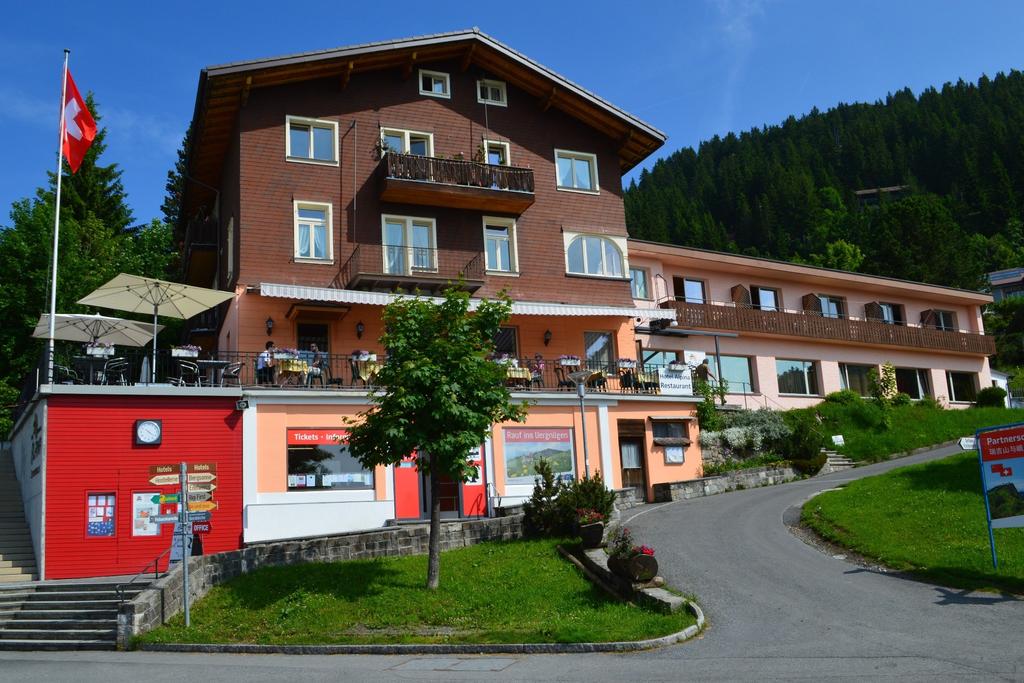
This is the best place to wait for the train, since if you’ve paid for what you’ve had, all you have to do is walk down the outside stairs and walk across the tracks to board. I went up there and had a salad and a couple decis of white wine. Nice day, warm, sun leaning westward, the lesser of the two views showing to the north — Luzern, and the Jura in the distance. When lunch was done I pulled out the pad I always carry with me up there (the laptop was locked up in the apartment) and started to go over the remainder of the Dilemma outline and the beginning notes for the broad “arc” outline for the next three books. There were some details that were evading me.
I kept getting distracted. The day was gorgeous. The surroundings were gorgeous. The restaurant manager, waiting tables, let me alone except to bring me a little more wine and to pause by me briefly to deadhead some petunias in the nearby windowbox hanging over the railing. I stared at the train station for a while, and the building site to the left of it where they had finished tearing down the century-old hotel there and were rebuilding it on the same site, and then I turned my attention to the pad again.
Pad. Pen. Red and white checked tablecloth. Something standing beside the table. White. A pig. A large pig, its back at nearly the same level as the table.
“You never come see me any more,” says the Pig in a voice partaking about equally of Milton Berle and Harlan Ellison. “You don’t even call.”
The next second contains the following thoughts, in more or less this order:
(1) A pig?
(2) Boy, this is a good one.
(3) Why a pig?
(4) Oh, it’s him…
(5) Now isn’t that interesting. I wonder….
“You come here often?” I “say” to the Pig, since I feel it’s rude to treat one of these visitations entirely as if I were making it up. Then I laugh. Dumb line.
He laughs too, and he’s gone. Reality, such as it is, reasserts itself in toto. But I’ve been reminded of something I hadn’t thought about in a while. I think about it. Some ideas start to arrange themselves in configurations they hadn’t been in before. These look like much better configurations than the earlier ones. I start making notes. The train comes. I ignore it. I ignore the next one. And the next. I finally catch the last train up, around the time it gets too dark to write.
When I get home I check my own reference to the Pig, and check the one in Barry Hughart’s BRIDGE OF BIRDS. I do a big old web search and another search at the main library at Trinity, and find hardly anything. Through a mutual acquaintance I get in contact with Hughart (who never made any use of the character beyond the one throwaway reference) to see if he knows anything more about the Pig. He gets back to me in due time and adds a little info from another source besides the Larousse, a large work on Chinese mythology, but there’s really very little data, and nothing to prevent me going in the direction I’m heading already.
So I write the Pig my way.
…In the original posting, what followed would have been spoilery: but Dilemma has been out a long while now. As matters evolved, it became obvious why the Pig got involved (and indeed needed to become involved) in the Wizard’s Dilemma storyline (and not before: and why he was going to step in again, if briefly, during Wizards at War).
…And why we are not done with him yet. But that’s all I’m going to say about the subject at the moment.

Ursula Vernon’s perfect take on the Pig

Wizard’s Holiday is with its editor now, and I expect I should be hearing from him momentarily with notes on the manuscript. While that’s happening…there’s this strange brief halcyon time (three or four days, anyway…) in which I actually can sit around for the better part of a day and not do anything.
— For some values of the above, anyway. “Not doing anything” this week has included: work on updating the “European Cuisines” website, preparatory to moving it into its own domain: testing new webtracking software: some assorted gardening: going up to the local nursery to consider what tree to plant in the hedge to replace the one destroyed by the joyriders who nearly crashed through the hedge and into the corner of the house: stripping unnecessary files off Ryoh-ohki’s hard drive, since she may have to go back to Japan next week for a service (the keyboard has begun acting up in the wake of the sake incident last week, though there are also signs that it might be putting itself right — it’s hard to tell, just hafta keep hacking at it for a while): doing the laundry: cleaning the fishpond: doing “travel agent” things regarding an upcoming trip during which Peter and I will go away and soak our heads for a week…
And there’s still been time to get some other writing done. While gearing up to get the Rihannsu sorted out at last (and also doing early prep work for Wizards at War) I’ve been able to at last finish “Herself”, the Irish fantasy story I’ve been fiddling with for the best part of six months, and get it off to its editors, who liked it. Now I get to write a story about a game show for another anthology. The brain is ticking over on this one, which I suspect will be another candidate for an eventual, putative Duane short-story anthology called New Gods for Old. (Assuming the thing ever happens. )
And yes, pre-work work on The Door Into Starlight is going on as well. Don’t think I’m not sensitive to the background screams and cries of those who’ve been so patient for so long. But things are coming together now.
 In all of this, I’m finding the new version of Dragon Naturally Speaking to be a big help…and so is the little creature to the right. I dictate into it, and then (via a USB cable) Dragon magically sucks the words out of the recorder and transcribes them. So I can go out for a walk in the early morning, spend a lovely couple of hours talking to myself, and then come back and — instead of having to type out the resultant material — can have a cup of tea and watch the computer do it. Ah, technology…what a wonder! (When it works….)
If the recorder has a weakness, it’s that (a) the file-folder system it uses is frankly Byzantine in its complexity, and (b) the controls are a perfect evocation of that last ad in the movie Crazy People: “Caucasians are just too damn big.” The rocker switch is very small, does about five different things, and if you push your finger a millimeter in the wrong direction at a crucial moment, you’re screwed. However, the tool is so powerful and useful that I’ve just sort of resigned myself to the steepness of the learning curve.
Meanwhile, they’ve started harvesting their barley, up the hill. We’re having a few days of dryish weather, and all the local farmers seem to be taking advantage of it. This means that the early-morning walks are slightly complicated by huge harvesting machines rumbling up and down the roads (and the necessity for them to get far enough away, after passing me, so that I can record again without a lot of noise which will give Dragon the pip).
…An afterthought, just in passing. There’s also one other thing which has been an issue, now that I’m doing a lot more dictation than I have for the last year or so: how to get past feeling stupid while dictating. I don’t know if others who compose while dictating have experienced the problem, but it was a big hurdle for me — getting past the self-consciousness about telling a story out loud to no one (since when it’s working well, there’s no particular sense of me being there, either). Even when there’s no one for miles around, this affects me…though less and less with practice. — What’s funny, though, on these morning story runs, is the looks I get from drivers who see me walking along “talking to myself”. In certain moods I like to make sure the recorder is visible…not easy, it’s so small! In other moods, I don’t give a damn…let them think I’m  crazy. Like the people in town who see me talking to Peter using the Bluespoon wireless earpiece (ETA: no longer available, alas, I loved that thing)— so small it can’t be seen when my hair gets over it — and who don’t see the flashing blue light it produces when in active use. 🙂 (There it is on the left — on my monitor it’s nearly life size, a shade under two inches long [35 mm]; it weighs about ten grams. Mine is just plain matte blue — I think it was a slightly older version of the one shown here.)
(Of course, sometimes when people do see it the results are similarly amusing. A bunch of guys at the airside bar at Dublin Airport a couple of weeks ago saw me walking back and forth while talking to Peter, and did see the bright blue flashing; they were fascinated. One of them shouted loudly enough for half the terminal to hear, “Hey, lady, c’mere, we want to see your thing!” Well, gee, thanks, guys… Another one yelled, “Hey, Lieutenant Uhura!” Heh.)
(Specs, etc. for the Sony recorder are here.)
Well, it was a close thing, but I managed to eat it before he did.
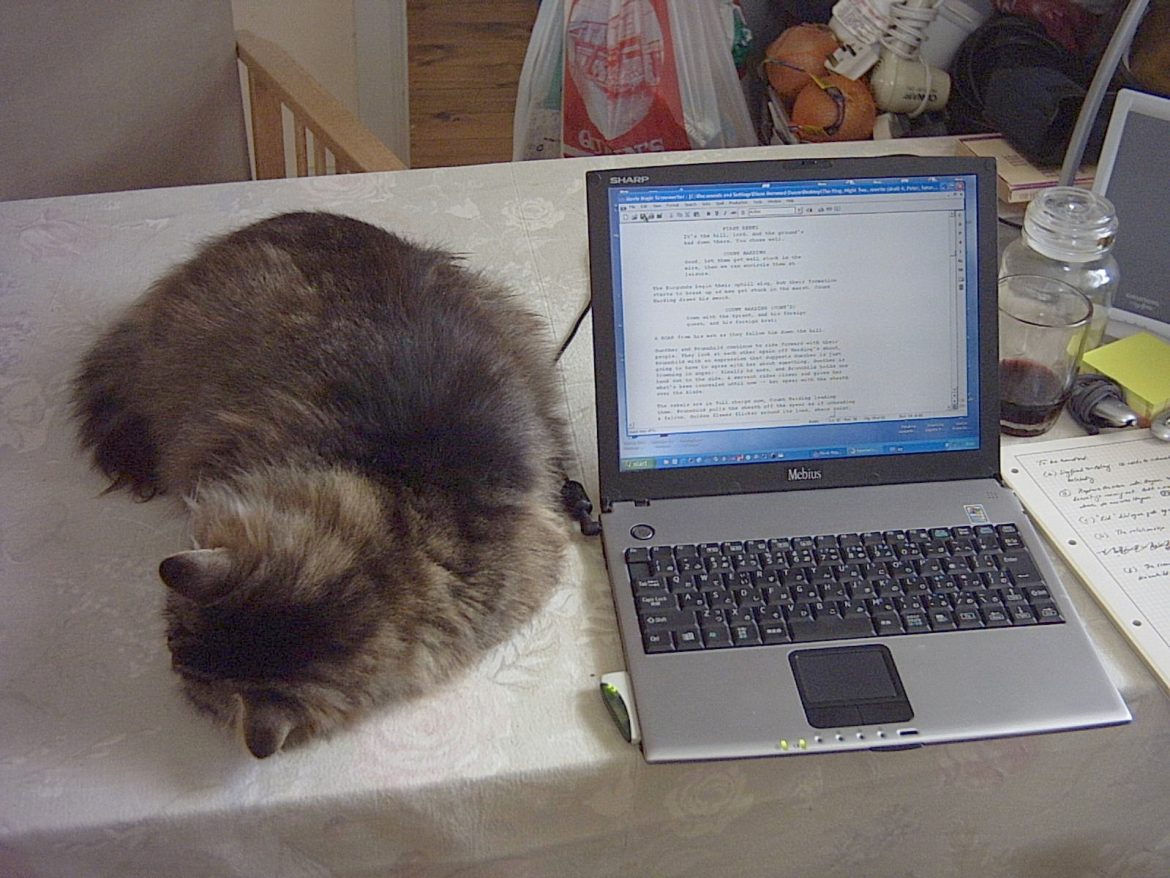
The late and much-missed Lilith used to have this virtue: that she could unerringly find and lie on the most important piece of paperwork in the house. A check, a contract (as in the picture that gave the writer for the New York Times a minor conniption for some reason), a letter you were supposed to be answering, a newspaper that you wanted to cut something out of: Lilith would be on it. For a long time, when you couldn’t find some important piece of documentation, the answer was, “Look under the cat.”
These days Mr. Squeak seems to be holding that space or function, though in a more virtual manner. Here he is (after trying to take that taco out of my hand) not quite lying on the computer; but that’s only after I moved him several times, and was forced to move further down the table to keep him from doing Cat Rewrites on the Ring script. Since Squeak weighs nearly fourteen pounds and has the typically huge feet of the Norwegian Forest Cat, when he stands on the keys, it takes some cleaning up afterwards.
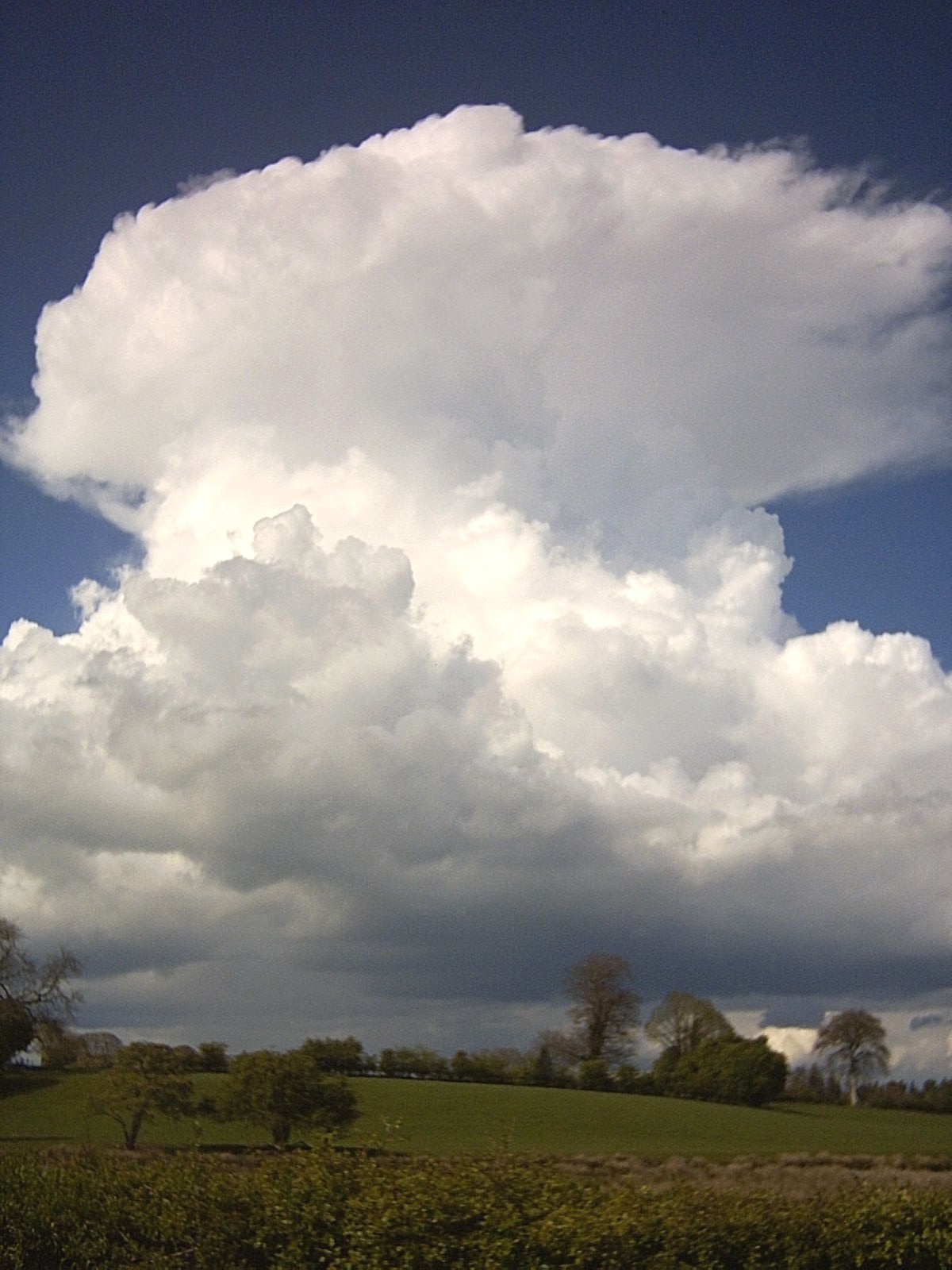
A side point: This really isn’t such a bad digital camera, though eventually we do want a better one. The camera is a Umax AstraPix 540 which cost us something like ninety pounds Sterling from Scan. The image below was taken at highest resolution, without flash, and the only thing I did to it in Corel PhotoPaint was tweak the gamma a little. For comparison, see the second image, taken during a period of interesting weather the other day. (See below.)
Meanwhile, busy busy busy on the script all last night and well into this morning for Peter: and ditto for me this afternoon, while I incorporate the last set of changes into this draft.
Probably the cat and I need another taco around now.

It’s what submarine crews do. One shift rolls out of the bunks, gets dressed, goes to work: the other shift goes off work, undresses, falls into bunks still warm from crewmates’ bodies.
Around here “hot-bunking” means both of us working on the same project, in shifts, more or less 24 hours a day. We’ve done it before (for example, while I was story-editing “Dinosaucers” and finishing work on The Romulan Way with Peter). We’re doing it now on The Ring, while I also work on Wizard’s Holiday.
The problem with this kind of schedule is that, with both of us so intent on the work, local nutrition tends to suffer. Which is bad, because in such cases work suffers too. However, we have a standard household solution for this problem. It’s the justly famous “Mitternachtsuppe” or “Midnight Soup” recipe from the Department of Nuclear Chemistry of the University of Mainz. It’s fast; it’s easy to make; the pot can be more or less constantly replenished with the same ingredients as the soup level falls (or with different ones, so that the soup changes subtly from day to day or even hour to hour); it can be kept simmering on the stove for long periods without damaging the quality of the soup (in fact it just gets better the longer it goes on); and it freezes well, so if when you finish a project you also find you’re tired of the damn stuff, you can just sock it into the freezer and come back to it another time.
Our take on it appears below momentarily (as soon as I find where I’ve hidden it from myself. Trouble is, I know the recipe so well by now that I rarely bother referring to it).
ETA, 18 September 2024: The recipe’s normal home at EuropeanCuisines.com is down for refurbishment at the moment. Nonetheless, here’s that recipe.
The ingredients:
- 1 – 2 kabanossi or similar mildly spicy sausage (and any other sausages you favor: frankfurters, pepperoni, you name it…)
- 100 grams bacon, the smokier, the better
- 2 onions
- 400 grams ground beef (or you can substitute ground turkey or chicken if you prefer, but the soup works better with beef)
- 1 can cannellini or similar white beans
- 2 cans red kidney beans
- 750 ml beef stock or bouillon
- 1 or 2 cans chopped tomatoes, according to your preference
- 1-2 cloves garlic
- To taste: regular chili powder (maybe a teaspoon)
- To taste: Paprika (hot paprika if you like, but don’t overdo it. Smoked paprika also works well)
- To taste: Hot chili flakes
- To taste: a shake or two of Tabasco sauce
- To taste: a shake or two of Worcestershire sauce
- To finish: 200 ml yogurt or creme fraiche
Find a large heavy soup pot. Chop up the bacon and sauté it until the fat runs. Chop up the onions and sauté them with the bacon: then add the sausages, also chopped, sauté them briefly, add the garlic and do the same. Finally add the ground beef and sauté it until it colors. Season this mixture with the spices and seasonings and continue to sauté. Meanwhile heat the beef stock to near boiling: add it to the mixture in the pot and stir well. Add the beans and tomatoes. Allow the whole business to boil for a few minutes: then lower the heat, cover, and simmer for at least an hour.
When serving, ladle out the soup and stir a spoonful of yogurt or créme fraiche into each serving.
This recipe doubles well. It can also be extended over several days by adding more beans, more stock, more sauteed sausages, etc., as necessary.