Look at the headbumps, the rubbing, the goofery. These guys enjoy each other.
Work day, busy busy. But first:
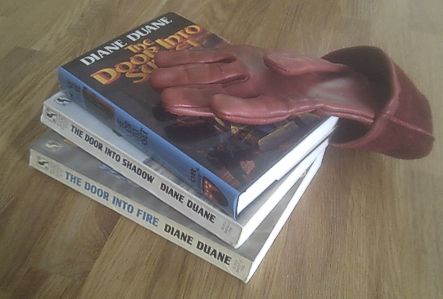
At the Ebooks Direct store we now have Microsoft Reader versions (the .lit format) of The Door into Fire, The Door into Shadow, The Door into Sunset, and the Tale of the Five Omnibus. (I was holding off on the conversion to .lit because I didn’t have the reader and wasn’t sure how they’d convert. Seems they look OK, so here they are.) Just use the pulldown menu on each page and the .lit version will reveal itself. …We’ll start rolling out .lit versions of the Young Wizards international editions and the various other books shortly. Also: in couple of weeks we’ll be putting up the revised edition of Stealing the Elf-King’s Roses, with a cover that more accurately supports its identity as an urban-fantasy police procedural (yes, with a love interest, but what do you call Gil Grissom and Sara Sidle, then? Chopped liver?).
BTW, Microsoft: what is this dumb stunt of emailing me a video about “how the Declaration of Independence would have looked if the Founding Fathers had had Word”? They had something way better than Word, people. They had the words. Here are a few of them for you: Consanguinity. Usurpations. Conjured. Despotism. Inestimable. Perfidy. And possibly the best one in that document: Unalienable. …Seriously, someone over there must have sent that email out before their blood caffeine level got high enough for them to realize how witless it would look in retrospect.
And by the way: WIL WHEATON IS NOT A DICK. Pass it on. (frowning at some people’s behavior) Seriously: there’s no excuse for it. And it doesn’t have to be like that. I remember how when George Takei came out for a Trek/media convention in Dublin some years back, he was briefly astounded at not being dogpiled at breakfast even though he was surrounded by a breakfast room full of eager fans. It was explained to him that nobody was going to bother him as long as he was obviously eating and reading his newspaper. When he stopped one or both of those behaviors, then people would approach him. And that’s just how it happened, though he wasn’t mobbed then, either: folks came up and visited him by ones and twos and threes at decent intervals. …A pity this kind of behavior can’t spread westward. In any case, Wil did exactly right. And good on Felicia for having been proactive.
Meanwhile: the main Young Wizards website has had a makeover. There may be a few pages that haven’t been optimized for the new layout yet (mostly in terms of images having their background colors changed, etc.) but Lee the Web Lady will hunt them down and sort them out over the next couple of days. Final issue: how to get the slider to fade rather than slide, if possible. (Probably some fiddly little jQuery thing. To be handled sooner or later…)
And finally: the Door into Starlight issue — bumping this a bit so that I can be sure everybody interested has had a chance to respond. If you’ve seen it already, apologies: please ignore it. (And thanks again to all those who have responded.) If you haven’t, leave a note in the comments, or Tweet with a link to the original message, or share it on G+ or Facebook. Thanks!
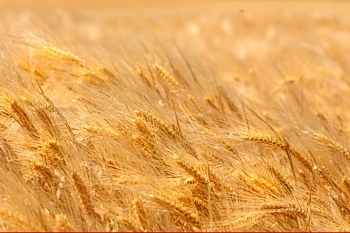
After a dry spell that lasted way too long for our farmer-neighbors’ preference, we’ve been having a lot of rain in the last couple of weeks, and as a result the grain in the fields has made up for lost time and is now coming along a lot better than it was doing in May and early June. The atmosphere of relief around here is palpable. Most of what’s grown in our immediate neighborhood barley rather than wheat, and destined for Guinness or anomal feed rather than anyone’s bread machine. But the locals still depend on the crops they grow to keep them (or their cattle) eatingafter the growing season is over.
The wildlife is also interested in eating that grain, of course, and as a result a sound specific to this time of year is now to be heard day and night: the bird-scarer. This is a simple device that creates a loud gas-powered BANG at intervals. (The better sort of these create the noise at random intervals rather than just doing it once every, say, four minutes and thirty seconds. But both kinds are in use within earshot of the house.)
You quickly learn not to notice this sound after a while (or else you go stark raving nuts…). But this morning I found myself noticing the noise, and realized that it was trying to remind me of something: specifically, the half-finished story of which a fragment follows — this passage being what was triggered by hearing a series of those BANGs late last summer. The story, “Borderlands”, takes place between the events of The Door into Sunset and The Door into Starlight; in it Herewiss is called in to solve a particularly nasty series of murders. Freelorn goes along with him, partly to get away from some of the more annoying aspects of being a king (like work…) and partly because, in general, there’s just no keeping him out of Herewiss’s business anyway. As the story develops, this turns out to have been an extremely good thing…
Really must finish this: it doesn’t have that much further to go. The story will turn up at the online store when it’s done (since there are already some other MK-based works on offer there), and maybe I’ll submit it someplace as well. Meanwhile, the fragment is under the cut.
See that, she’s not always geeking out over Green Lantern.*
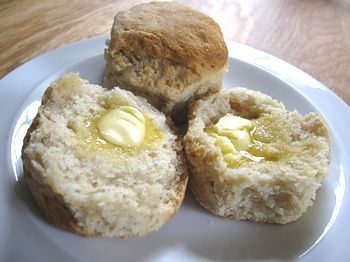
There are too many sourdough biscuit recipes out there that are simply substandard. A lot of them have titles like “Grandma’s Sourdough Biscuits”, but when you make them, you start getting the sense that Grandma must have had iron teeth like Baba Yaga. It can get discouraging.
Never mind. I found a good recipe today. This poster once worked for The Colonel, and has brought some of the biscuit-making tricks away from the experience. Check out her recipe here:
Sarah’s Musings: Sourdough Biscuits
…I used starter that had been fed yesterday, and it didn’t seem to make too much difference to the flavor. The recipe produces a very light and tender biscuit.
(Oh, and I didn’t bake them quite as long as recommended. I gave them 25 minutes and they turned out perfectly.)
So give them a try.
*Oh, and about the Green Lantern non-geekery: So I lied. (At least I did if the embed works…)
ETA: Now with a better image of Mogo!! … I originally posted this piece of writing some years back when there was a Green Lantern-drawing meme going around. But this weekend I had reason to think of it again, what with all the GL-oriented stuff going on.
Many, many moons ago I did some writing for Bob Greenberger when he was editing Tales of the Green Lantern Corps. I’ve always been very fond of the Corps, as might possibly be understandable for someone who came to comics more or less hot from E. E. “Doc” Smith’s “Lensman” novels. The fondness continues: certainly the Young Wizards owe something to them, and to the general Band-of-Brothers trope that underlies the Corps’ ethos.
Anyway, this (with a short preamble) is a copy of the comic script I wrote for Bob.
And here also is an image of Mogo, that member of the Corps best known for “not socializing”. (See also here and here for additional info.) I’ve always really liked Mogo. There’s a wallpaper too: click here or on the image to download it from Box.net. The dimensions are 1920×1200. (This is yet another piece of digital art produced using Terragen 2.0. The cloud cover isn’t perfect yet, but this doesn’t look too bad. Also: please note that the sun-on-ocean effect in the thumbnail image isn’t as pronounced in the wallpaper. I’m trying to work out why.)
Terragen 2.0 really is a wonderful toy. I’ve been using it for the Young Wizards international edition ebook covers, as well as other things.
It’s also great for wallpaper. I was playing with terrains and water the other day, and this came up. If you like it, feel free to download it — it’s hosted over at Box.net. The dimensions are 1920×1200.

A friend asked to see these videos, so I thought I’d bundle them together in a single post.
They’re comments on a certain airline which unarguably has changed the face of aviation in Europe — unquestionably for the better — but has since turned into something of a nightmare. Our own nightmare unfolded during the 2010 eruptions of Eyjafjallajökull, during which Ryanair’s complete uselessness and unhepfulness caused Peter to swear many mighty oaths regarding what he would someday do to “that man” should the airline’s MD ever venture within range.
And as regards the airline’s general fitness-for-purpose when volcanoes are not erupting… seems a lot of other people have opinions that chime with ours…
WARNING: especially regarding the first video, the Cheap Flights song by the wonderful musical comedy group Fascinating Aida — do NOT be drinking anything while this runs.
And now a few words on the subject from der Fuehrer.
I had an email from my NY agent about this late yesterday, and all the principals are agreed on the main details, so I don’t see any particular point in waiting for the paperwork before telling the world.
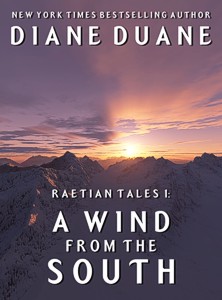
Apparently the good folks at Audible have been seeking out books to adapt to the audiobook format — whether they’re conventionally published or not. And they’re signing on to make an audiobook out of Raetian Tales 1: A Wind from the South. (With an option to also do the next volume in the series when written.)
This is super! I’m so buzzed.
For those of you who want to pick up a copy so you’ll be in a position to judge the results when the audiobook comes out, you can get the ebook from the DD.com Ebooks Direct store here (cheapest, no DRM, both ePub and Kindle / .mobi available); from Amazon (Kindle / .mobi only, a little more expensive but more convenient if you’ve already got your details stored there: btw, thanks for the nice reviews, folks…); or if you prefer, acquire a print “trade paperback” copy of the book from Lulu.com.
Whee! Thanks, Audible!
Once upon a time, the King of the Greek gods, Zeus, was getting ready to cheat on his wife again. His latest target was a beautiful mortal girl named Io, whose resistance he’d been wearing down by sending her a series of racy dreams of which he was the star. Having finally arrived on her doorstep to make his case in person, Zeus wrapped the two of them and that whole region of the world in a thick black cloud to hide the incipient goings-on.
This was a serious tactical error. Zeus’s wife Queen Hera noticed the peculiar change in the weather, checked Olympus to see if her husband the Cloudgatherer was on site, and – not finding him there – immediately put two and two together and headed for the area of sudden overcast. She dispersed the clouds and found herself looking at her husband and an extremely lovely (and one must assume, confused-looking) white cow, which Zeus explained had sprung from Mother Earth just that minute. Not even slightly fooled, Hera promptly confiscated the cow, and assigned to guard her – or rather, to make sure her husband didn’t get anywhere near her – one of her security staff, a creature by the name of Argus. Argus was completely covered with eyes that stared in every direction and saw everything for miles around. The eyes even slept in shifts, so that the watcher’s pitiless regard was inescapable by night or day. Hera went off confident that her husband’s case was well handled.
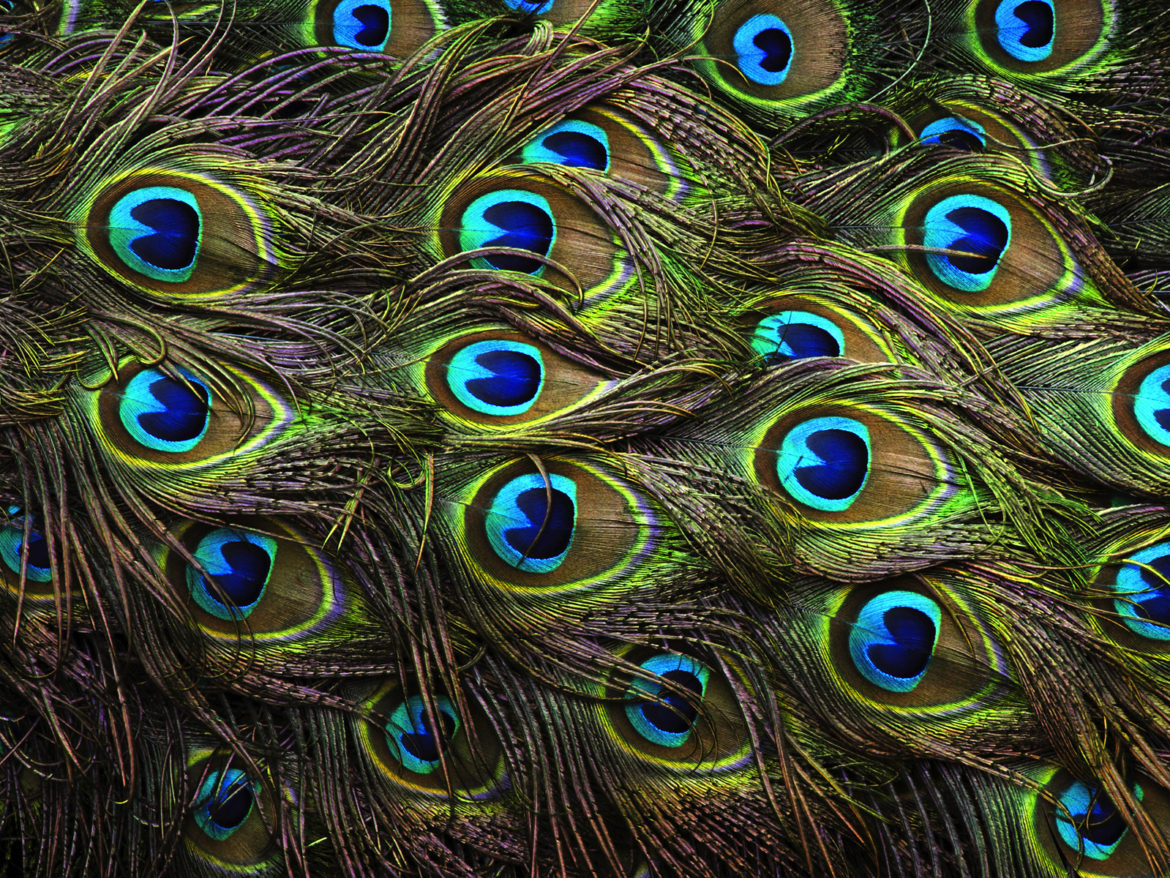
Myths being what they are, of course, such a situation can’t last. Zeus quickly has words with Olympus’s resident thief, trickster and inside-job man, Hermes, who disguises himself as a handsome shepherd boy and shows up in the flowery meadow where Argus is guarding Io. There he proceeds to bore all Argus’s eyes to sleep by telling him serial tales of mortal romance.* Then, when the last of Argus’s eyes fall asleep, Hermes pulls out his sword and kills him, signaling, if not the end of Io’s troubles, at least the beginning of the end. Later on the frustrated Hera winds up putting all of Argus’s eyes in the tail of her favorite bird, the peacock — probably as a reminder to Zeus that at least this once she caught him in near-flagrante — and over the subsequent centuries Argus’s name becomes a metaphor for unsleeping watchfulness.
The world is full of people who appoint themselves to roles like Argus’s, as would-be watchers and guardians. Sometimes they’re even useful in those roles. Their motives aren’t always suspect: sometimes they genuinely mean well. But good intentions aren’t always enough. And sometimes these can lead the would-be guardians into serious mistakes, especially when their intelligence (in the informational sense) is incomplete or poor.
It looks like we’ve just seen an example of this in a recent Wall Street Journal article, which spends a while purporting to analyze the “fitness for purpose” of some modern-day young adult fiction, the kind that deals openly with difficult topics like self-harm. The reactions to the article’s assertions have been widespread and passionate. Readers and writers alike have responded at length, and lots more opinions and links to them, short and long, are to be found on Twitter filed under the #YASaves hashtag.
Having read the article, though, I found myself reacting most strongly to two specific passages that jumped out at me: and the reactions came on two different levels.
The first passage really annoys me as a former psychiatric professional:
“Yet it is also possible—indeed, likely—that books focusing on pathologies help normalize them and, in the case of self-harm, may even spread their plausibility and likelihood to young people who might otherwise never have imagined such extreme measures.”
“Indeed, likely –”? I’m ready to be shown the clinical study that underlies and supports this statement. So sweeping a generalization has no business being made in a public forum without a solid underpinning of fact. What fact I can bring to this issue is that in my time as a psychiatric nurse who worked with adolescent / young teenage patients, I never came across a single case that supports any aspect of the columnist’s opinion. If she can produce any evidence to reinforce her claim besides what I strongly suspect is wishful thinking, I’ll be glad to examine it and draw my own conclusions as to its validity.
But I really doubt there is any such data. And if (as I suspect) that conclusion just came out of the columnist’s head as a feeling or a theory, or was a vague summation of even vaguer third-person anecdotal material, I have one word for it: CODSWALLOP.
What I found while doing one-to-one therapy with adolescent patients is that to successfully start working through their problems, what they initially needed more than anything else was confirmation and acknowledgement from those around them that the problems existed in the first place – that they weren’t unique or alone in their situation, that other people knew about it and that it was real. Books dealing with the problem in question were and are often a useful tool to help that acknowledgement get started, and even (in some cases) in getting a patient past their own denial that they had any such difficulty at all.
When I was practicing, such books were often painfully dry and didactic, and I wish there’d been more young adult fiction available on such subjects… for fiction (especially when done well) tends to lecture less than nonfiction and is more likely to be successfully internalized because you’re hearing, not a dry recitation of fact, but someone’s voice. Young adult novels that deal honestly with such issues unquestionably have value for teens groping their way toward understanding of how to tackle their problems. They invite them into the dialogue: they make the troubled teen part of the solution. And at the very least, they let their readers know that they’re not alone. There are times when that knowledge is enough to mean the difference between life and death. Here, without any doubt whatever, YA really does save.
A side issue here: there are probably some who think I have no dog in this particular race, since my YA books are not known for dealing with edgy teen issues, and also have no explicit sex, not a lot of violence, and language not much stronger than the “crap” level. This is personal preference for me, a matter of style. But I support my colleagues who are working the grittier and more uncomfortable part of the young adult coalface, and I strongly dislike the casual, if not outright mischievous, mischaracterization of their works in the columnist’s article. She has done them a disservice, and owes them an apology… which unfortunately I doubt will be forthcoming.
So much for that. Now for the other statement, the one that got up my nose in my role as a former teenager:
It is a dereliction of duty not to make distinctions in every other aspect of a young person’s life between more and less desirable options.
…Oh really, now. Every other aspect? And not just distinctions, I bet, but decisions. So there are no areas in which the child or young adult can be considered competent to have his or her own opinions, and make his or her own choices, without having them vetted and pre-ratified by the ever-watchful parent? (Because from the WSJ article, you get a strong feeling that when Mommy Says No about, for example, a book — well, the poor young adult just gets to pull on his or her PJs and go to bed early: there’s no mechanism for appeal.)
I really hope that’s not what the columnist is suggesting, because I don’t know about the rest of you, but it sounds like Hell on earth to me. And that would not just be because I’m one of a generation who would have laughed out loud at the very idea of my parents organizing, for example, when (or if) I went out to play, or who or what I played with. In my spare time I went where I pleased, lay out in green fields for prolonged periods staring at the sky and doing nothing remotely “useful” or educational, adventured widely through my neighborhood unsupervised, climbed trees and fell out of them, stayed out after dark (having informed my mom that I’d be doing so), and had a secret place to go and read where I spent hours on end, with no need to account for my movements to anybody. To have somebody ruling yes/no on every aspect of my life until I was eighteen? There’s a word for that kind of life. It’s jail. (And some of you will probably recall J.R.R. Tolkien coming up with something similar in a discussion of the value of the literature of escape. “Who are the people most concerned with the possibility of escape?” he asked. “The jailers.”)
I do not accept that life for kids is all that much more dangerous than it was when I grew up. I just don’t. The difference between now and fifty years ago is that we now openly discuss the dangers that were often only whispered about half a century ago. Yes, the new millennium has thrown up many new and different threats to the concept of the peaceful and safe childhood (itself something of a construct, but that’s a subject for another post). But those threats and challenges ought to be met in some other way than locking the kids up in a virtual tower until they’re eighteen. The fairy tales (always a treasury of useful archetype) tell us straightforwardly what happens to such children.
Under no circumstances am I questioning a parent’s right or responsibility to protect his or her children from danger. But I do think we’re building the protective fences way too high. Unfortunately, the sensationalistic focus of mass media on unusual events like the kidnapping, abuse and/or murder of children has successfully exploited the increasingly anxious love and cynically fanned the fears of a whole generation of parents, until they genuinely think it right that everything about their children’s lives must be rigidly controlled until they are no longer legally responsible for them. People who advocate some kind of return to common sense in these matters are practically condemned as the Antichrist. Freedom? That’s something a child will be allowed to experience only after it turns eighteen. Or maybe after it exits college at age twenty-one or thereabouts, and starts trying to find employment sufficient to pay off those pesky student loans. Until then, many North American parents are trapped in their role as frazzled, Argus-eyed controllers of their children’s mobility, their after-school activities, their diet, their access to money, their online activity, and a whole lot of their entertainment.**
Books, though, are revealing an interesting chink in this theoretically all-encompassing defense. Some parents are apparently beginning to find books scary because they’re not like the ones they read when they were kids… and because they understand from firsthand experience that books interact directly with the imagination in an essentially noncontrollable way that movies and TV and computer games do not. After all, when you sit down to watch a TV show or a movie with your child, you can at least verify that you’re being presented with the same imagery and deriving generally the same meanings from it. But you can’t be sure of that with a book: the reader does so much of the work in his or her own head. As a result, the hypercontrolling parents whose attitudes are reflected in the WSJ article sometimes seem to act as if they consider books to be a potential delivery system for some dangerous drug that will overwhelm their child’s defenseless mind. (The concept that the child might be able to stand aside from the book’s content and evaluate it independently before accepting or rejecting it is of course rejected out of hand.)
But I think this attitude is a pointer toward the underlying problem responsible for the article’s tone of righteous (and frightened) indignation. The presence of all these awful books on the market suggests that there must be a lot of young adults reading them – kids who are obviously out of the absolute control of their parents! (Horrors.) And this undeniable fact will surely provoke, in the hypercontrolling parent, a fear that their own defenseless child might possibly listen, not to the parent, but some book-pushing friend, and read one of these deadly objects… and the parent won’t be able to stop them from internalizing the contents. This will be due to a terrible truth that no hypercontrolling parent wants to face, but which books force them to confront more clearly than usual: Though so many other aspects of your child’s life can be controlled by you, the inside of your child’s mind is simply not one of them. With this unbearable admission, the hypercontrolling parent’s only daily certainty in their relationship with their children – the illusion of control – suddenly fades away.
And those of you who may have been children at one point or another will possibly remember another aspect of this truth (if you actually remember your childhood, and haven’t idealized it into a few frozen images. So much of this whole situation flows from people not remembering…) You know that if a child is absolutely focused on a parent not finding out about something, odds are good the parent never will. Let the parent have eyes like an Argus, they still won’t be able to keep their child under those eyes for every minute of the day. And Hermes, in his aspect as the wily patron god of untrammeled communications, is always lurking just around the corner: for if a child really wants to read something without this parent knowing it, he will find a way.
One of my parents tried to exercise the columnist’s style of control with me, at one point, way back when – trying to keep me from reading material “too old for me” and calling the local library to say that I wasn’t to have access to it. I was outraged, for I considered what I put into my brain in my spare time to be my business – my personal area of greatest freedom, and one I wasn’t going to give up for anybody. (I probably didn’t phrase this exactly this way, being nine at the time. But the above sentiment renders exactly how I felt.) The joke, though, was that I needn’t have wasted the outrage, because I quickly discovered for myself that there were simple ways around the silly parental prohibition (which I knew was silly because I knew what I was after – general knowledge, nothing salacious or evil).
Don’t get me wrong here. I’d have been delighted to discuss the whys and wherefores with the parent in question, so that we could work it out, they wouldn’t worry, and I wouldn’t have to hide what was going on. But it was imposed on me as a diktat, and all such attempts on my side to get some negotiation on the issue failed. So I gave up on what was plainly a wasted effort and got on with business… though I was still sad that my parent, even after all those years spent raising me, plainly didn’t know me very well at all. For the reading I was interested in doing, I simply took a bus to the next town over and used their library instead. They didn’t know about the “guidelines” my parent had issued to the home library, and the local library could report (if asked) that I was obeying the prohibition. Problem solved. (Was I guilty about deceiving my parent? Yes. For about five minutes. [Five minutes is a surprisingly long time when you’re nine.] Did my parent ever find out? No. Did I suffer any harm from it? Not in the slightest.)
The point is that now it would be way, way easier than that to game the parental system. You could make a case that books are the most easily concealed of all information technologies, and as technology continues to explode around us all, the situation just gets better for the clandestine reader. Besides libraries where your kid can read out of your sight, there are computers that don’t have NetNanny installed on them. There are other kids’ smartphones, left unlocked by parents not quite so controlling or paranoid. You think you’ve got your own kid’s phone locked down? What technology can limit, technology can defeat, and info on how to hack the protective apps on a phone, how to get around the parental-choice software on a laptop or a desktop PC, is common currency in every schoolyard, in newsgroups and online forums, on Facebook and in Tumblr and on Twitter and many other places. It passes in stealthily exchanged thumb drives, and jumps like lightning by text, in codes parents can’t understand, from phone to phone. Even that epitome of “safety” and supervision, the playdate, can be subverted if the kids know what they’re doing, and are careful about how they coordinate the manipulation of their parents. (It’s a choice irony that parents who have been manipulating every aspect of their kids’ lives for decades routinely have no idea where the kids have picked up the talent, and are horrified when it’s turned on them.)
It must be terrifying for the hypercontrolling parent to be jailer in so porous a prison. You have to feel for them.
…For about five minutes. If you’re a parent who’s become committed to such a role, you have only one hope of successfully discharging your “duty.” You must bribe or blandish or scare your prisoners into believing that your actions are either for their own good (that most horrifying of justifications, sometimes worst when genuine), or just too much trouble to fight. Otherwise you have no chance of maintaining any significant level of control. The minute the kids decide to stop cooperating, you’ve lost the game. But while you’re winning, you’re as much a prisoner of the regime as they are. And you’ll remain so until your children leave home – possibly ill-equipped, due to your actions, to be out on their own in this century – and you collapse, exhausted.
I think there is a way out of this trap. But it’s dangerous, and it flies in the face of too much of today’s unquestioned “wisdom” about childrearing. It involves building a genuine informed partnership with the resident child or young adult as regards reading material, with give and take on both sides; and a real attempt to put yourself into the other party’s head, instead of merely imposing sheer brute-force control (which will eventually fail). It involves actually reading books that you’ve heard scary things about to find out if those things are true, before you start issuing reading fatwas. And – scariest of all – it involves standing up to other parents who will try to force you back into the role that they’ve succumbed to for the sake of being seen as a good parent, sometimes even when way down deep they’ve disagreed with it.
Of course it won’t be easy. As my mom used to say (I believe quoting the cookbook writer Peg Bracken), “For every pint of wine you drink in this life, you’ll drink a quart of vinegar.” While forging and implementing this agreement with your child, there will be screaming and yelling and carrying on, “human sacrifice, dogs and cats living together, mass hysteria,” and so forth ad infinitum. But if you stick it out and make the break, you and your child together will have a chance to experience a shared experience of literature that in retrospect will make both childhood and parenthood memorable.
And as the certainty sets in that your children are going to be all right – as they assert their ability to handle their own growing freedom, and you realize that you’ve clawed back at least one precious sector of yours — you will at last be able to sigh with relief and start shoving those sleepless eyes back into the peacock’s tail… right where they belong.
*Attn: romance-writing colleagues: I’m not taking a poke at you. It’s in Ovid. Apparently after a long warm thyme-scented Greek afternoon of sweet reed-piping and storytelling, the tale of Pan and Syrinx is what pushes Argus over the edge into Snore City.
**I have to add that most European parents I know from a quarter century’s life on this side of the water find the whole North American “helicopter parent” concept kind of bizarre: some use it as yet more evidence that a lot of my people need their heads felt. As a former head-feeler, I normally invoke possible conflict-of-interest issues and seek an excuse to either leave or order another pint.
Save

There are these ten pounds that I keep getting rid of and that keep coming back. It’s sheer carelessness on my part: I get unconscious about what I eat for a few months, and whammo, the jeans stop fitting. So it’s time to make cottage cheese again.
Yes, I said “make”. It’s not that they don’t make cottage cheese in Ireland. They do. But it’s nowhere near as tangy as the small-curd cottage cheese I grew up on back on Long Island (Breakstone’s. Sigh…), and it’s very wet and sloppy. For this reason, some years back I went looking for a good from-scratch cottage cheese recipe, and the kindly Jonathan White of Bobolink Dairy, out in rural New Jersey, gave me one. It’s here.
This stuff is not hard to make. (People in cottages made it, after all. With very basic equipment, and without thermometers. It’s getting so that I don’t need the thermometer either: after a fair amount of practice I can judge heats and times by ear.) It’s a great way to make use of extra milk: it’s a great way to control the fat content and sodium content of your cottage cheese. You can also do it as a dessert cheese, sweetened. (This is the way the above-vaguely-referred-to Miss Muffett would have eaten it. Some people of a century or two ago liked the sweet/sharp contrast of sugared curd against the whey that had drained from it. I know, some of you will go ewwwww. But if you’re a buttermilk drinker, you’ll probably be able to guess at the effect I’m thinking of here.) And this cottage cheese makes the Best Cheesecake Base (for curd-based cheesecakes) EVAR. It’s fantastic.

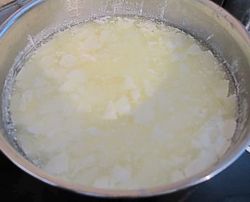
Anyway, for reference purposes: five liters of milk makes about two pounds of small-curd cottage cheese. The method’s simple. You pasteurize some milk (cleanliness is the only thing that’s really important about this whole process), let it cool down to about 90 degrees F, inoculate it with buttermilk, stir well, and then cover it and put it somewhere with a slightly warm and even temperature. The friendly lactobacilli in the buttermilk, and its acidity, will set the milk fairly solid within 36 hours. When this has happened, you cut the curd and let it sit in its whey for a few hours — overnight if, like me, you prefer a tangier cottage cheese. (This is what’s going on in the image to the left.)
The next day you heat it gently and hold it at the target heat for about an hour and a half: then pour the curds into a dishcloth- or cheesecloth-lined colander, let them drain, rinse them gently (or make a bag of the cloth and dip them in a sink full of cold water, if you’re obsessive about preserving the structure of the curd) and hang them up to drain over a sink. Or out on the clothesline.
That’s it. Take the stuff out of the cloth, stick it in a Tupperware-or-whatever container, and eat within a couple/few days. Delicious. Hmm, it’s Wicklow strawberry time… I could get some of those in the next grocery delivery… Yeah. YUM.
Almost all writers I know have work superstitions, though it’s not something we usually discuss except amongst ourselves. They’re like the superstitions some sportsmen have — the way, for example, that baseball players cross themselves when they’re coming up to bat. (Often provoking the response, Oh, come on now, you didn’t have to cross yourself so many times. And do you really have to touch yourself there right afterwards? How can your nethers need so much adjustment when you’ve hardly moved? And now you’re doing it again. I’m looking away now… )
For writers it can be any one of a number of things, or a combination of them. Which way the desk is oriented. How many cups of coffee you have to have before you can sit down and start work. A certain kind of pencil to scribble notes or doodles with. The right seat in the right cafe. Not starting work before a specific time. Not starting work after a specific time. Some of these habits just seem to begin themselves: some are a behavior or an accessory that may have been sheerly accidental at the time, but which the writer has come to associate with work that just came out right.
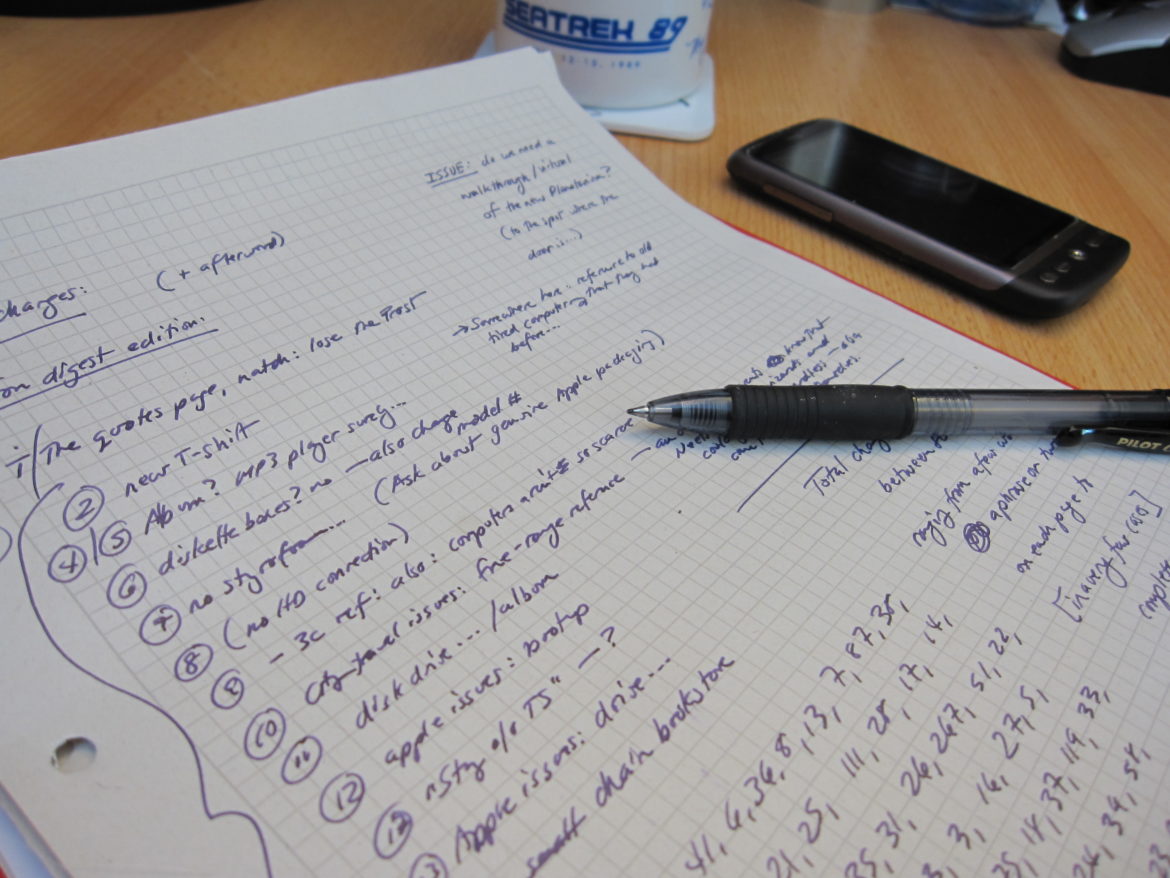
This is mine: grid paper. Specifically, this grid paper from the Swiss supermarket/department store chain Migros.
I’d have to do a little digging to nail down the exact date when this started, but it goes back at least to the late 1990s—not long before the Transcendent Pig started turning up in the YW books. (I’m pretty sure that the writing episode featuring the Pig that’s described here was conducted on Migros grid paper: “the pad” is mentioned, and before the Pad came along, it would have been just plain white printer paper.) In any case I was in Switzerland a lot during the 90’s— doing research for A Wind from the South, among other things—and since everybody who stays in Switzerland for any length of time winds up in a Migros sooner or later, it was probably a given that I would run across these pads eventually and pick one up.
But they’ve turned out to be really nice to work on. Reasons:
But most important of all for me:
Don’t ask me how or why. It just seems that way.

So I don’t use it on just anything: no to-do lists, no shopping lists. (Those go on sticky notes, either real ones or the virtual ones in my smartphone. Though sometimes work notes do wind up on these due to accident or necessity, and those get stapled up over the desk so I don’t lose track of them. They are never removed until the line or issue mentioned on the note is dealt with in print. Some of these have been around for a while: see the image to the left.) The grid paper is saved for outlines, serious notes or edits (like the ones above, for the High Wizardry New Millennium Edition revision), hand-writing chapter excerpts (as detailed in that link above), and other such heavyweight stuff.
When somebody in the household goes over to CH (or these days, to Germany: there are some Migros outlets there now too), they’re always enjoined to bring a couple of pads back home with them. These go on the shelf by the desk where I can peel off a few sheets in a hurry if I need some at home, or else pack some in a bag with the red plastic writing clipboard if I’m going offsite.
So now everybody knows.
Whether this “magic” has the slightest chance of ever working for anyone else, I have no idea. These things are so subjective. The definition of superstitious behavior, after all, is that it assumes or attempts to create causal links where none really exist.
But who can tell. If it does someone else some good… cheers.
In the “Not sure I’d want it in my house, but nonetheless it’s interesting / cool” department:
Duffy London is doing a line of fairy-tale(ish)-oriented furniture. Or rather, one fairy tale in particular… as the items seem to focus mostly on dead wolves and axes.
Possibly the wittiest one is the were-chair with the wolf shadow. (Look down in the “DD’s Tumblr” column on the front page and you’ll see it.) The axe-tables, though, unfortunately make me think a little too much of someone yelling “Heeeeeere’s Johnny!!”…